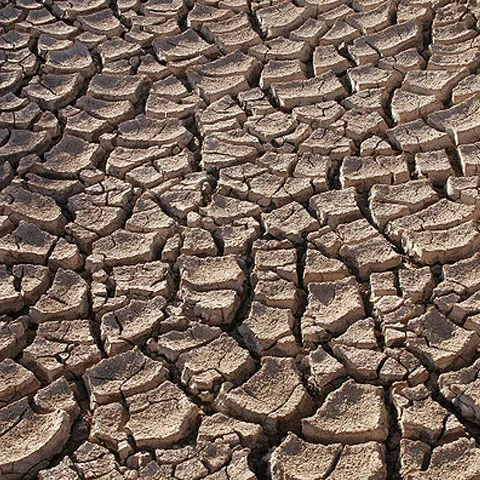
This year Romania could declare state of calamity because of the drought that already affected more than one million hectares sown with cereals, declared the Agriculture Minister Ilie Sarbu.
The
1.05 million hectares were 50 percent or less affected by frost and
drought. The minister estimates that this year the state of calamity
will cover a large area.
Sarbu
mentioned that although the irrigation system was extended from 200,000
functional hectares in December 2008 to 500,000 hectares, it is still
not be enough to deal with the drought as it uses old technology and
wastes power and water.
Among
the long-termed solutions suggested is a gravitational irrigation
system that uses water from uphill accumulation lakes and the
finalization of the Siret-Baragan channel. Sarbu added that farmers
could help reduce the effects of the crisis by drilling wells.
The
minister promised that farmers will have their losses paid back by the
government if the state of calamity is declared and assured that the
price of bread will not go up as it is settled on the European market.
Niculae
Stefan, president of the Agrostar federation declared recently for
NewsIn that nearly 4 million hectares of the country's 7 million arable
hectares will be affected by drought that will kick in at the end of
May. The most damaged areas are said to be those in the south of the
country, in the east of Moldavia and Dobrogea.
Cristian
Hera, president of the Romanian Agricultural Sciences Academy, also
stated that almost 50 percent of the country's corn and sunflower crops
will be scorched, as farmers use imported hybrids which are not adapted
to drought.
The
National Meteorologic Administration (ANM) announced that temperatures
would vary strongly in May, with up to 30 Celsius degrees during the
day and down to -5 degrees in the night. The temperatures in August are
expected to exceed normal limits.
On
the other hand, Romania's National Water Administration (ANAR) claims
the water supplies are enough for the population, the industry and the
agriculture, so that there is no question of restricting the amounts of
water used, even if the hydrological system flows below normal values.