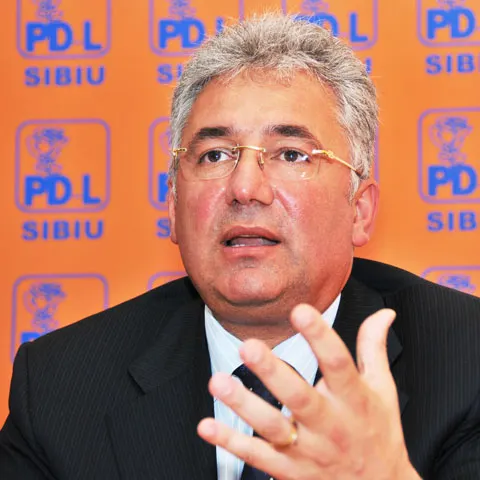
The public debate on the restructuring of Romania's power sector could be prolonged unti the end of July or the beginning of August, declared the Economy Minister Adriean Videanu.
Talks
with the operators, labor unions and employers' unions on the power
sector restructuring were not finalized until July 15, the initial
deadline.
“We
will extend the public debate with the main private players on the
market, E.ON, Enel, CEZ. This week we will with the operators and we
will continue talks with the unions in the energy sector,” said
Videanu.
Romania's
main electricity suppliers have pointed out that if state-owned
supplier Electrica is included in the two companies created through the
restructuring of the power system, the market could be disturbed,
paving the way to unfair competition.
Electrica would be divided into two distinct branches and each would be included in one of the two companies.
The
fears concerning this action were expressed by E.ON, Enel, CEZ and Gas
de France, whose officials met today with the economy minister. A new
meeting will be held on July 15.
The
first company will comprise the energy complexes in southern Oltenia
(Turceni, Rovinari and Craiova), the two units of the plant in
Cernavoda (belonging to Nuclearelectrica), the National Company of
Lignite Oltenia (SNLO), part of Electrica, and two units of
Hidroelectrica, SH Valcea and SH Slatina.
The
second company will include: ELCEN, CTE Deva and Paroseni (belonging to
Termoelectrica), Portile de Fier, the rest of Hidroelectrica, CNH,
Romgaz and the rest of Electrica.
CNH and Termoelectrica are the single companies with debts in the new structure.
The
two companies resulting from the restructuring will be listed on the
stock market, with a percentage to be established later on. Fondul
Proprietatea will become a shareholder as well.
The Economy Ministry will be the majority shareholder of the two companies and will play a part in appointing the management.
Videanu
previously announced they would be functional by the end of the year.
One company would chew on 48 percent of the market and the other on 44
percent.